
 By Olivia Wilson Media Team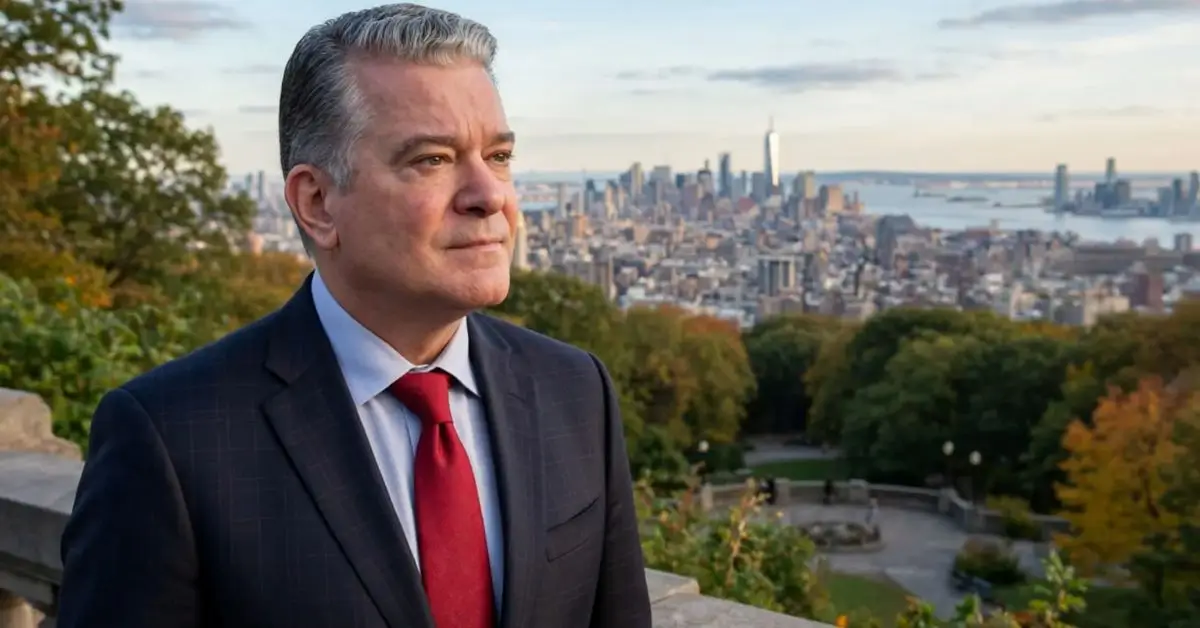
When a public figure has a career that spans law enforcement leadership, published fiction writing, and regular media commentary, it’s natural for people to search for a comprehensive profile — the kind of organized, factual overview that brings together what’s publicly known about a person’s background and work into one reliable place.
Paul Mauro is one of those figures. He’s known to different audiences for different reasons — as a former senior NYPD inspector, as a crime fiction author, and as a media commentator who appears regularly on television and radio to discuss law enforcement, crime, and public safety policy. Each of those roles has its own audience, and people searching for “paul mauro wikipedia” are typically looking for a single source that connects all of them into a coherent profile.
The challenge is that public figures with multi-phase careers are often covered in fragments — a news interview here, a book review there, a media appearance listed somewhere else. Getting the full picture requires pulling those fragments together.
This guide does exactly that. It provides a comprehensive, clearly organized profile of Paul Mauro — his law enforcement career, his writing, his media work, his public commentary, and the context that makes him a figure of genuine public interest in the US conversation about crime, policing, and public safety.
Paul Mauro is a retired NYPD inspector, crime fiction author, and media commentator who has built a public profile across three distinct but connected areas — a distinguished career in New York City law enforcement, a published career as a novelist writing crime fiction informed by real police experience, and an ongoing presence as a media voice on law enforcement and criminal justice topics for US audiences.
Paul Mauro is a retired NYPD inspector turned crime fiction author and media commentator. This guide covers his full biography — law enforcement career, writing, media presence, and public commentary — in one organized, comprehensive profile.
Paul Mauro grew up in the New York area — a background that shaped both his eventual career choice and the authentic New York voice that characterizes his writing and public commentary. The cultural context of New York City — its neighborhoods, its social dynamics, its complicated relationship with law enforcement across different communities and eras — runs through everything Mauro has done professionally.
Growing up in New York during a period when the city was navigating significant crime challenges, fiscal stress, and complex community-police dynamics gave Mauro a formative perspective on urban law enforcement that would later inform both his police career decisions and his writing.
His academic background prepared him for the dual demands of a law enforcement career that eventually extended into public communication. He has demonstrated throughout his career the ability to explain complex institutional and criminal justice issues to general audiences — a skill that has as much to do with education and communication ability as with operational experience.
Paul Mauro’s law enforcement career with the New York Police Department spans several decades and represents the most foundational chapter of his public profile. He rose through the ranks of one of the largest and most scrutinized police departments in the world — an institution that operates under constant public attention, political pressure, and media coverage.
Rising Through the Ranks
Mauro joined the NYPD and worked his way through progressively senior positions over the course of his career. The NYPD rank structure — from police officer through sergeant, lieutenant, captain, deputy inspector, and inspector — reflects increasing levels of command responsibility and institutional leadership. Reaching the rank of inspector represents a significant career achievement in an organization of approximately 35,000 officers.
At the inspector level, Mauro held leadership responsibilities that extended beyond individual unit command — involving policy, administration, community relations, and the management of significant operational resources.
Areas of Expertise Within Law Enforcement
Throughout his NYPD career, Mauro developed expertise that positioned him for later public commentary roles. Law enforcement professionals who rise to senior ranks typically develop deep knowledge of criminal investigation, departmental administration, community policing strategies, and the political and institutional dynamics that shape large police departments.
This operational knowledge — the kind that can only come from years of working within a complex institution — distinguishes Mauro’s commentary from that of purely academic or policy-focused voices on law enforcement topics. He speaks from direct experience with how police departments function, what challenges officers face at the operational level, and how policy decisions translate into street-level practice.
Retirement from Active Service
After his NYPD career, Mauro transitioned into the public-facing roles — writing and media commentary — that have defined his profile since retirement. This transition is increasingly common among senior law enforcement officials who bring institutional credibility and operational knowledge to public conversations that benefit from both.
One of the most distinctive dimensions of Paul Mauro’s public profile is his career as a crime fiction author. His novels draw directly on his decades of law enforcement experience — creating fiction that is grounded in authentic institutional and procedural detail rather than the stereotypes and procedural inaccuracies that characterize less informed crime writing.
The Value of Authentic Police Fiction
Crime fiction written by people who have actually worked in law enforcement occupies a distinct and valued position in the genre. Readers who care about procedural authenticity — how investigations actually work, how police departments function internally, how the legal and institutional constraints of law enforcement shape what officers can and cannot do — notice the difference immediately between writing based on real experience and writing based on research alone.
Mauro’s fiction carries the weight of his direct professional experience — in the dialogue, in the institutional dynamics he depicts, in the moral complexity he brings to law enforcement characters and situations.
Writing Style and Themes
His fiction tends to engage with the kinds of moral and institutional complexity that actually characterize policing in a major American city. The tension between individual officers and departmental administration, between community expectations and operational reality, between legal procedure and the messy facts of street-level crime — these are themes that recur in crime fiction written by people who have lived them professionally.
For readers interested in New York City as a setting, Mauro’s fiction carries the specific geographic and cultural authenticity of someone who has worked within that environment for decades.
| Career Phase | Role | Key Contribution |
|---|---|---|
| NYPD Career | Officer through Inspector rank | Operational law enforcement leadership in NYC |
| Fiction Writing | Crime novelist | Authentically grounded police procedural fiction |
| Media Commentary | TV and radio commentator | Law enforcement perspective on public safety topics |
| Written Commentary | Published analyst | Extended analysis of crime and policing policy |
| Public Speaking | Law enforcement voice | Accessible explanation of complex police issues |
Paul Mauro has established a consistent presence as a media commentator on law enforcement, crime, and public safety — appearing on television and radio programs where his background as a senior NYPD official gives his perspective institutional credibility that policy experts and academics often can’t match.
Television and Radio Appearances
Mauro appears regularly on news and commentary programs — both local New York media and national outlets — where discussions of crime, policing policy, and public safety require voices with direct operational experience. His ability to explain law enforcement perspectives clearly to general audiences makes him a recurring contributor to these conversations.
In the US media landscape, where crime and policing have been among the most consistently prominent public debates of the past decade, voices like Mauro’s — combining career credibility with communication clarity — fill a genuine role in helping audiences understand complex institutional realities.
Commentary on Crime and Public Safety Policy
Mauro’s public commentary addresses the full range of criminal justice topics that dominate American public debate — crime rates, policing strategies, departmental funding and staffing, community-police relations, criminal justice reform, and the specific challenges facing major urban police departments.
His perspective is grounded in operational experience rather than ideological positioning — an approach that makes his commentary useful to audiences across the political spectrum who want to understand how law enforcement actually functions rather than receiving advocacy dressed as analysis.
Written Commentary
Beyond broadcast media, Mauro has contributed written commentary to publications that cover law enforcement, crime, and public safety topics. This written work extends his analytical voice beyond the time constraints of broadcast media, allowing for more developed arguments on complex topics.
Understanding why Paul Mauro generates public interest requires understanding the intersection of the roles he occupies simultaneously.
Senior law enforcement officials who transition into public communication roles are relatively rare — most retire into the private sector or consulting work that doesn’t generate public profiles. Those who do engage in public communication typically do so within the narrow scope of their specific expertise.
Mauro’s profile is more layered than most. He combines the operational credibility of a senior NYPD career with the narrative ability of a published fiction author and the communication skills of a consistent media commentator. This combination positions him to reach audiences that no single one of those roles would access alone.
For US audiences interested in crime, policing, and public safety — topics of significant ongoing public concern — Mauro represents a voice that is simultaneously credible, accessible, and grounded in direct experience.
Paul Mauro represents a type of public figure that’s genuinely valuable in American civic life — someone who has done the work, understands the institution from the inside, and can communicate that understanding clearly to people who haven’t. His combined career in law enforcement, fiction writing, and media commentary makes him a more complete voice on crime and policing than any single role would allow.
If this guide helped you build a comprehensive picture of who Paul Mauro is and why he matters, explore more biographical profiles and public figures coverage on this site.
Paul Mauro is a retired NYPD inspector, crime fiction author, and media commentator focused on law enforcement and public safety.
He retired as an NYPD inspector, a senior leadership rank requiring extensive experience and command responsibility.
Paul Mauro has written crime fiction inspired by his NYPD experience, with a focus on police procedures and criminal investigations.
He regularly appears on television, radio, and other media outlets discussing crime, policing, and public safety.
His credibility comes from decades of NYPD experience and his senior leadership role as an inspector.
Wikipedia status can change. Searching Wikipedia directly provides the most current information.
[…] name Cenelia Pinedo Blanco appeared in public discourse primarily through news coverage and social media discussions. Unlike […]