
 By Olivia Wilson Media Team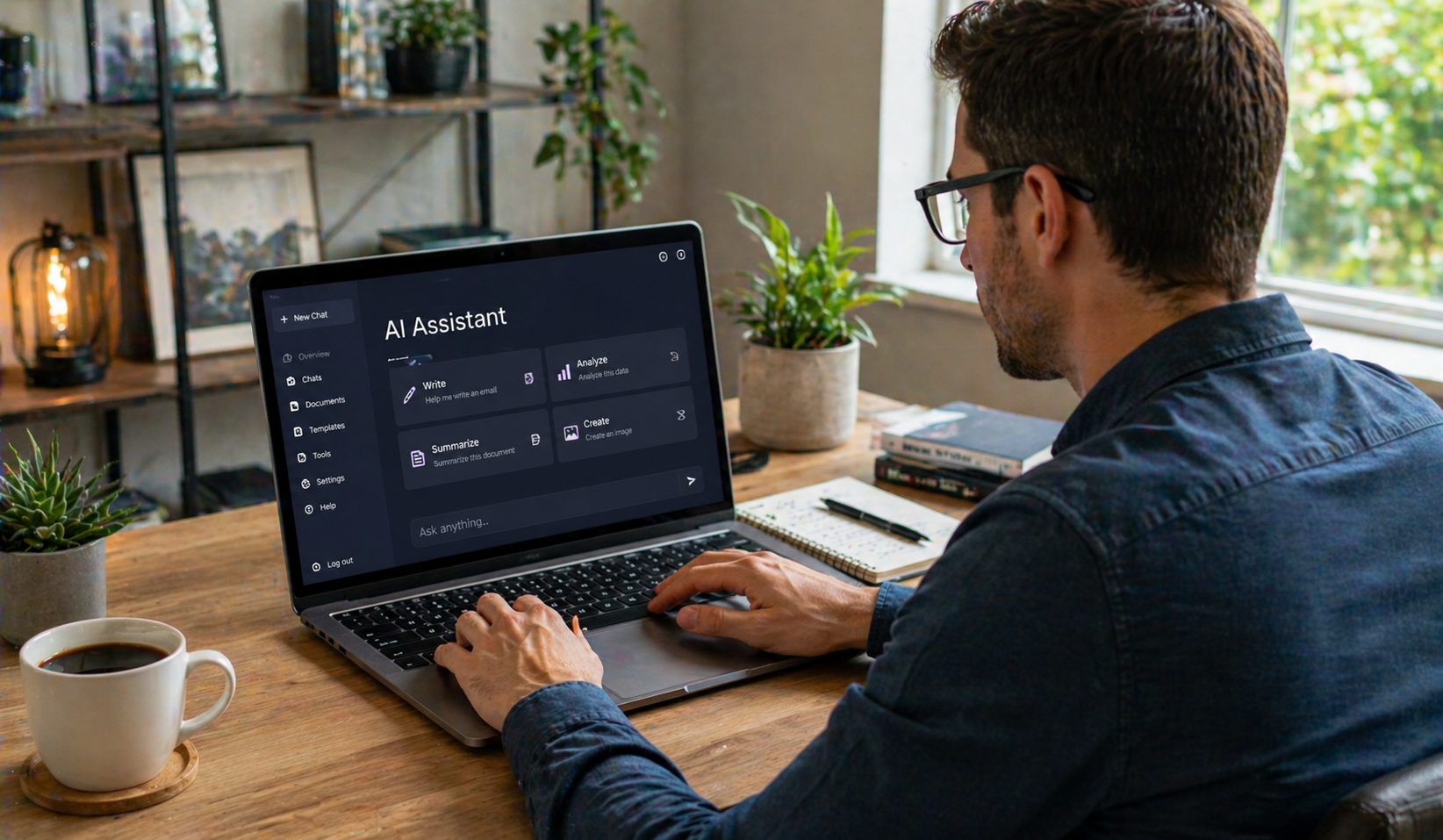
Artificial intelligence has moved beyond science fiction and specialized industries to become an accessible tool that can simplify your everyday life. Learning how to use AI for daily tasks doesn’t require a computer science degree or technical expertise. Today’s AI-powered tools are designed for regular people who want to work smarter, save time, and accomplish more with less effort. From managing your schedule to creating content, answering questions, and organizing information, AI applications have become so user-friendly that anyone can harness their power within minutes of discovering them.
The transformation AI brings to daily routines is remarkable. Tasks that once consumed hours now take minutes, and activities that seemed impossibly complex become manageable with the right AI assistance. Whether you’re a busy professional trying to maximize productivity, a student managing coursework, a parent juggling family responsibilities, or simply someone looking to make life easier, understanding practical AI applications opens up new possibilities. This guide walks you through accessible ways to integrate AI into your daily routine, focusing on real-world applications that deliver immediate value without overwhelming technical complexity.
Before diving into specific applications of how to use AI for daily tasks, it helps to understand what modern AI tools can realistically accomplish. Today’s consumer-facing AI excels at processing and generating text, answering questions based on vast knowledge databases, recognizing patterns in data, creating images from descriptions, transcribing speech to text, translating between languages, and providing personalized recommendations based on your preferences and history.
AI assistants can draft emails, summarize lengthy documents, generate creative content, solve math problems, explain complex concepts in simple terms, write code, create meal plans, suggest travel itineraries, and even engage in nuanced conversations that help you think through problems. Image generation AI creates original artwork, logos, and visual content from text descriptions. Voice AI transcribes meetings, creates accurate captions, and enables hands-free device control. These capabilities sound futuristic, but they’re available right now through free or affordable applications accessible on your phone or computer. Understanding these practical capabilities helps you identify opportunities where AI can genuinely improve your daily workflow rather than viewing it as abstract technology reserved for tech companies and researchers.
One of the most practical applications when learning how to use AI for daily tasks involves AI writing assistants that help with everything from emails to reports. Tools like ChatGPT, Claude, and similar platforms can draft professional emails in seconds based on simple prompts. Instead of staring at a blank screen wondering how to phrase a difficult message, you simply tell the AI what you need to communicate and it generates a polished draft you can personalize and send.
These assistants excel at transforming rough ideas into structured documents. If you need to write a project proposal, business letter, or school essay, you can provide the key points you want to cover and let AI create a complete first draft that you then refine with your specific knowledge and voice. This approach dramatically reduces the time spent on initial composition while eliminating writer’s block. AI writing tools also help with proofreading and editing, catching grammar mistakes, suggesting clearer phrasing, and adjusting tone to match your intended audience. For non-native English speakers, these tools provide invaluable assistance ensuring communications sound natural and professional. The key to effective use is treating AI as a collaborative partner rather than expecting perfect final products without human input and refinement.
Managing busy schedules becomes significantly easier when you understand how to use AI for daily tasks related to time management and planning. Modern AI-powered calendar applications go beyond simple appointment tracking to intelligently optimize your day. Tools like Reclaim, Motion, and features built into Google Calendar use AI to analyze your commitments, priorities, and working patterns, then automatically schedule tasks and meetings at optimal times.
These smart calendars identify gaps in your schedule suitable for focused work, buffer time between meetings to prevent back-to-back exhaustion, and automatically reschedule lower-priority items when urgent tasks emerge. Some AI calendar assistants integrate with your email, detecting meeting requests and scheduling details within messages, then adding events to your calendar without manual data entry. They can suggest meeting times that work for multiple participants by analyzing everyone’s availability patterns. For personal productivity, AI scheduling tools help you block time for important tasks that otherwise get postponed indefinitely, treating personal goals with the same priority as external meetings. By letting AI handle the complex puzzle of fitting everything into limited hours, you reduce decision fatigue and ensure important activities actually happen rather than remaining perpetual intentions.

Research that once required hours of searching through websites, articles, and databases now happens in minutes when you know how to use AI for daily tasks involving information gathering. AI assistants can quickly summarize lengthy articles, extract key points from research papers, compare different sources on a topic, and synthesize information from multiple perspectives into coherent overviews that save you tremendous time.
Instead of reading ten different articles about a topic you’re exploring, you can ask an AI tool to summarize the consensus views, highlight areas of disagreement, and identify the most important points you should understand. For students, this means quickly grasping the core concepts of assigned readings before class discussions. For professionals, it enables rapid familiarization with new industries, competitors, or technical topics relevant to projects. AI research tools also help verify information by cross-referencing claims against multiple sources and identifying potential biases or outdated information in what you’re reading. The important caveat is that AI should enhance rather than replace critical thinking. Use AI to quickly gather and organize information, but always verify important facts, check sources for significant decisions, and apply your own judgment to conclusions rather than accepting AI output uncritically.
Visual content creation represents another powerful application of how to use AI for daily tasks, now accessible to people without design skills or expensive software. AI image generators like DALL-E, Midjourney, and Stable Diffusion create original images from text descriptions, enabling you to produce custom graphics for presentations, social media, blog posts, or personal projects in minutes.
Need an illustration for a presentation but lack design skills and budget for a designer? Describe the image you envision in plain language and the AI generates multiple options matching your description. Creating social media content becomes faster when AI can produce eye-catching graphics tailored to your brand and message. Small business owners use AI image generation for marketing materials, product mockups, and website visuals that would otherwise require hiring designers. The technology works by understanding the relationship between words and visual concepts, trained on millions of images to learn what things look like and how they typically appear together. While generated images may require refinement and aren’t suitable for every professional context, they provide remarkable value for everyday visual content needs. Most platforms offer free tiers with usage limits, letting you experiment before committing to paid subscriptions.
Email overload affects nearly everyone with an inbox, making email management a prime area for learning how to use AI for daily tasks. AI email assistants can automatically categorize incoming messages by importance, draft responses to common inquiries, summarize long email threads so you understand context without reading everything, and even schedule send times to reach recipients when they’re most likely to engage.
Tools like SaneBox use AI to learn which senders and subject lines matter most to you, automatically filtering less important messages into separate folders you can review in batches rather than having them interrupt your workflow constantly. AI-powered response suggestions in Gmail and similar platforms offer quick replies to simple messages, saving you from typing routine acknowledgments and confirmations. For customer service roles or anyone handling high email volume, AI can draft personalized responses to frequently asked questions, which you then customize before sending. Some advanced email AI even detects tone and suggests adjustments when messages might come across as too harsh or unclear. These tools transform email from a constant distraction into a managed system you control, recovering hours each week previously lost to inbox chaos.
Educational applications showcase some of the most valuable aspects of how to use AI for daily tasks, making learning more accessible and personalized than ever before. AI tutors can explain complex topics at whatever level matches your current understanding, from elementary concepts to advanced technical details, adjusting explanations based on your questions and confusion points.
Learning a new language becomes more interactive with AI conversation partners that engage in realistic dialogues, correct your mistakes, and adapt to your proficiency level. Unlike traditional language apps that follow rigid scripts, AI conversation tools respond naturally to whatever you want to discuss, making practice more engaging and practical. For professional skills, AI can create customized learning paths based on your goals, current knowledge, and available time, recommending resources and creating practice exercises tailored to your needs. Students use AI to get homework help that explains concepts rather than just providing answers, building genuine understanding. Musicians, artists, and creators receive AI feedback on their work with suggestions for improvement. The key advantage over traditional learning resources is personalization without needing human tutors for every question. AI learning tools are available 24/7, infinitely patient, and adapt to your unique learning style and pace.
Managing money wisely becomes more achievable when you understand how to use AI for daily tasks related to personal finance. AI-powered budgeting apps analyze your spending patterns, identify areas where you’re overspending, and suggest realistic ways to save based on your actual behavior rather than generic advice.
These tools automatically categorize transactions from linked bank accounts and credit cards, eliminating tedious manual expense tracking. AI detects unusual charges that might indicate fraud or forgotten subscriptions draining your budget without providing value. Some financial AI predicts upcoming expenses based on your historical patterns, warning you about tight cash flow periods before they arrive and suggesting how to adjust spending. Investment platforms use AI to create personalized portfolios matching your risk tolerance, goals, and timeline, automatically rebalancing to maintain optimal allocation. Bill negotiation services employ AI to identify where you’re overpaying for services like internet, phone plans, and insurance, then either negotiate better rates on your behalf or show you cheaper alternatives. While you should never blindly follow financial AI recommendations without understanding them, these tools provide valuable insights and automation that help you make smarter money decisions with less effort than traditional financial management requires.
Voice-activated AI assistants demonstrate some of the most visible examples of how to use AI for daily tasks through simple spoken commands. Devices like Amazon Alexa, Google Assistant, and Apple’s Siri control smart home devices, answer questions, set reminders, play music, provide weather and traffic updates, and handle dozens of other routine tasks without requiring you to stop what you’re doing to type or tap.
The convenience extends beyond novelty when you’re cooking and need to set timers or convert measurements hands-free, when you’re getting ready and want to hear your schedule and news briefings, or when you’re in bed and want to turn off lights without getting up. Smart home integration powered by AI learns your patterns and preferences, automatically adjusting thermostats before you arrive home, turning on lights as evening approaches, and even ordering household supplies when they’re running low. Voice AI transcription services convert spoken words to text with impressive accuracy, useful for capturing ideas while driving, creating meeting notes without typing, and making content accessible to people with different abilities. The technology continues improving as AI better understands accents, context, and natural speech patterns, making voice interaction increasingly practical for everyday use.
Creative applications reveal unexpected dimensions of how to use AI for daily tasks, helping people express ideas they couldn’t realize alone. AI music generators create original background music for videos and projects based on mood and style preferences. Story and creative writing tools help authors overcome writer’s block, generate plot ideas, develop characters, and explore narrative directions they might not have considered independently.
Content creators use AI to brainstorm video concepts, generate thumbnail ideas, write scripts, and even create voiceovers in natural-sounding AI voices. Social media managers employ AI to generate post ideas, optimize posting times, suggest hashtags, and adapt content for different platforms. These tools democratize creative production, enabling individuals to create polished content that previously required teams of specialists. The ethical consideration is transparency about AI involvement where it matters, and understanding that AI enhances rather than replaces human creativity. The most effective creative AI use treats technology as a collaborative partner that handles technical execution and generates options while humans provide direction, judgment, and the emotional resonance that makes content meaningful. This partnership between human vision and AI capability produces results neither could achieve alone.
No technical background is required for most consumer AI tools. Modern AI applications are designed with user-friendly interfaces that work through simple text prompts, voice commands, or point-and-click actions. If you can send an email or use a smartphone app, you can use AI tools. Most platforms offer tutorials and examples to help beginners get started.
Many powerful AI tools offer free tiers with generous usage limits suitable for personal daily tasks. ChatGPT, Google’s AI features, and numerous AI writing and image tools provide free access. Premium subscriptions typically range from ten to twenty dollars monthly and offer faster responses, more features, and higher usage limits for power users.
This depends on the specific tool and how you use it. Reputable AI platforms state clearly what data they collect and how they use it. Avoid entering sensitive personal information like passwords, financial account numbers, or confidential work documents into public AI tools. Many companies now offer private or enterprise AI solutions with enhanced security for sensitive applications.
Absolutely. AI capabilities are expanding rapidly, and familiarity with current tools provides a foundation for adopting more advanced applications as they emerge. The basic skills of prompting AI effectively, understanding its limitations, and integrating it into workflows translate across different AI platforms and future developments in the technology.
Always verify important information from AI tools through reliable sources. AI can produce confident-sounding responses that contain errors or outdated information. Use AI as a starting point for research and draft creation, but apply critical thinking and fact-checking for anything important. Cross-reference claims, check dates on time-sensitive information, and consult authoritative sources for critical decisions.
Understanding how to use AI for daily tasks opens up practical possibilities that make life more manageable, productive, and creative. The technology has evolved from specialized industrial applications to accessible tools anyone can use to save time, enhance capabilities, and accomplish tasks that once seemed beyond reach without extensive expertise or resources. From writing assistance and scheduling optimization to creative projects and learning support, AI applications touch nearly every aspect of modern daily life.
The key to successful AI integration is approaching these tools with realistic expectations and a willingness to experiment. AI works best as a collaborative assistant that handles routine aspects of tasks while you provide direction, judgment, and the human elements that technology cannot replicate. Start with one or two applications that address your most pressing daily challenges, become comfortable with how they work, then gradually expand your AI toolkit as you discover new needs and opportunities.
As AI technology continues advancing, those who develop comfort and competency with current tools position themselves to adapt easily to future innovations. The skills you build understanding how to use AI for daily tasks today provide a foundation for navigating an increasingly AI-integrated world. Rather than fearing technology displacement, embrace AI as a powerful ally that frees you from repetitive tasks and amplifies your capabilities, allowing you to focus energy on work that requires uniquely human qualities like creativity, emotional intelligence, strategic thinking, and meaningful connection with others. The future belongs to people who effectively combine human strengths with AI capabilities, and that future is already here for those ready to engage with it.